Larina's Lit Lounge Issue 9
Happy Holidays Edition - A short story for you

My poem, “Ghostly Memory,” appears in the current issue of Penumbric Speculative Fiction Magazine. This piece was Poe-inspired and oh so much fun to write! I hope you’ll take a read and let me know what you think.
In honor of the holiday season, my gift to you is a short story of my own. I hope you enjoy reading.
Robot Rosy and Her Dog, Spot
by Larina Warnock
Rosy slipped a pastel peach cotton skirt over her head with one metallic arm. The skirt dropped and stuck on Rosy’s left hip joint, leaving the fabric askew. If she had ever needed proof that humans were a lesser species, she had it in the absurdity of clothing. Even so, Rosy adjusted the skirt and clipped it tight. Once it sat evenly over her midsection, she dropped a shawl-like blouse over her head. Humans always appeared more comfortable around droids wearing clothes, and making humans comfortable was a large part of Rosy’s programming purpose.
She was the last operational conservation droid in the world. In their last vSession, Central Processing assured Rosy that the bug responsible for the other conservation droids’ drive failure had been found and eliminated. “It is important to finish this task,” CP told her. “We believe this is the last pack alive. Margin of error is 0.02%.”
Rosy felt, not sad exactly, but worried. If this was the last pack, her programming purpose was over. Would she be repurposed? Decommissioned? She thought maybe she shouldn’t find this pack, but her programming wouldn’t allow her to do anything else. So, she finished getting dressed and called Spot.
Spot ran to her, wagging his tail the whole way. Human records stored in Central Processing indicated that tail wagging signaled happiness and that dogs, especially Labradors, liked it when someone petted them. Rosy kneeled down, her knee joints making a mechanical screech as she did, and put her metal nose to Spot’s organic one. Her sensation processing module immediately began working. Wet. 22 degrees Celsius. Healthy dog. Spot licked her, and she rubbed behind his ears.
“Are you ready?” Rosy asked.
Spot wagged his tail and ran to the door, paws plodding along the floor in whoomp whoomp sounds.
Rosy followed him, connecting to CP long enough to check the train schedule. The rail would arrive in one and one half minutes. Rosy and Spot waited on the platform outside Rosy’s station until the rail stopped and they could board. Like Rosy’s quarters and most other things in the world, the rail car was small and sparse. There was one other passenger, a maintenance droid, and Rosy stood next to it, her hand resting on Spot’s head. Spot sat and panted.
The maintenance droid exited the railcar seven point eight kilometers from where Rosy had boarded. That was the end of the city. Structures fell away from the horizon as tall trees encroached on the tracks and the mountainside became larger and larger in Rosy’s view.
She sent a vSession request to CP. “Is something wrong with the rail?” CP asked after accepting the request.
“No,” Rosy replied, “but I am getting a command line conflict error. Please debug.”
“Can I remote connect to diagnose?”
“Diagnosis unnecessary. Command line, programming purpose, conservation of species is conflicting with command line, programming purpose, self preservation. Remote connection open for debugging.”
Forty-two seconds passed. “Debugging complete,” CP said.
“Are you sure?” Rosy asked. The error was gone, but her processing speed still felt slow.
“Debugging is complete,” CP repeated. “Proceed with programming purpose, conservation of species.”
Rosy closed the remote connection and closed her vSession with CP. While being connected to CP provided droids with significant benefits, the ability to close those connections prevented the spread of viruses. Rosy didn’t think she had a virus, but she ran a self-diagnostic program anyway and found that her processing speed was, in fact, 0.05 seconds slower than it had been yesterday. The dropoff point loomed less than one kilometer from her, so she couldn’t reboot. “Well, Spot,” she said, “I hope it isn’t a fast pack.”
Spot barked. Spot’s bark gave Rosy something like what humans called joy. She patted him on the head and rubbed his ears. She wondered if her programming purpose also gave her the ability to connect with species like dogs. She was the only droid she knew of who had a pet. Even the zookeeper droids didn’t interact with their charges much beyond basic care.
The railcar stopped at a platform overgrown with weeds and fern. A single, spindly tree stuck through a hole in the right corner of the platform. Tall thistles struck through the walls of the station structure. Apparently, this station was far enough out that CP saw no reason to send maintenance droids. The lack of activity explained why a pack took up residence nearby. The few crumbling buildings also made excellent habitat.
Rosy checked her hard drive for information about her location before she and Spot ventured into the wilderness. It had once been a small town, population 1,277 at the last Census count in 2042. She scanned a map of the town to find buildings most likely to be inhabited and found three: a post office, a community center, and a restaurant.
She and Spot walked to the restaurant first. “Spot, seek,” Rosy said. Spot ran into the restaurant, sniffing the ground as he went. While Spot searched for a trail, Rosy scanned the building for heat signatures and found none. At the door to the restaurant, Spot ducked low, ears back and tail drooping, as he took tentative steps back toward her.
“It’s okay, Spot,” she said. “No one there. Good dog.”
Spot’s ears went up and his entire yellow rump wagged back and forth. He trotted to her.
“Let’s try the community center,” she told him. They walked a block down and a block over. “Seek,” she said. Spot ran off. Again, she scanned for heat signatures and found none. She began to worry. She expected to see at least a fading heat trail. She wondered if her processing problem was bigger than she’d realized. She ran the scan again to be sure, but wasn’t convinced that the building was empty until Spot came skulking out.
“Good boy,” she said, to get him wagging again.
They walked to the post office. “Do you think,” she asked Spot, because he was the only one there and the only one she could express her doubt to without risking being disassembled, “that I am missing details because of that programming purpose error?”
Of course Spot didn’t say anything, but he listened intently, one ear cocked higher than the other.
Rosy stood in front of the post office and pondered. She ran an error log and then a debug log. She quickly found the programming purpose error, but discovered that the debug log was deleted from her hard drive. “Why would CP delete my debug log?” she asked Spot, as if he could possibly know the answer.
Spot barked and barked again, nose pointing toward the hillside behind the old town. Rosy quickly saw what he was barking at: smoke. Rosy calculated. Half a kilometer away.
“Shh,” she told Spot. Spot stopped barking. “Good boy.”
The pair trekked up the hillside, over late fall pine needles and through old growth evergreens. Human records called this place Mt. Baker-Snoqualmie National Forest. A quick scan of her hard drive told Rosy that a person could see Mt. Baker from this location as late as fifty years prior. If a thing could be beautiful, Rosy thought the images of that volcano would be it.
Rosy and Spot kept climbing until they were close enough that Rosy’s sensation programming picked up smoke and soft voices. She put her hand on Spot’s neck, a gesture to stand still, and listened. If she heard enough of their conversation, her predictive algorithms would tell her whether she should send Spot ahead or approach herself.
“We can’t be the last,” said one voice, likely female.
A second voice, likely male, responded, “We are. It’s just us, Janet. We should head further north.”
The first voice again. “Everything is burned further north. No cover at all. We’re better staying here, Sam.”
Rosy’s fingers started twitching against Spot’s neck. Something was wrong. Her internal programming drove her to capture the three humans, to get them into the people zoo where they would be safe and their species conserved, but she couldn’t move her legs or tell Spot to seek.
She heard Sam say, “No cover, but no AI to catch us, either.”
Rosy tried to walk forward. Her legs were solidly stuck to the ground. Her processor started to whrrr, adding to her concern. She ran a self-diagnostic. There were no errors. Then why couldn’t she move?
“Spot,” she said. Her voice sounded--weak? “Seek.”
Spot darted off. Four minutes later, she heard his paws thumping against the forest floor toward her, along with footsteps. Human footsteps.
“Well what do we have here?” Sam asked. He had dark hair and a dark beard, both long and unwashed. He was skinny, and Rosy’s algorithm told her that he had not eaten the correct number of calories for several months. Sam’s eyebrows narrowed in an expression that Rosy recognized as thoughtful malice.
“I am a conservation droid,” Rosy said. “I am here to take you to the people zoo where you will be safe. We do not want your species to go extinct. There is food at the people zoo. There are friends at the people zoo. We will keep you safe.” She hoped that she could distract them with her words before they realized that she couldn’t move.
Rosy turned her head and saw a woman, Janet, kneeling next to Spot, nose to nose with him. He licked her, and she laughed. “I haven’t seen a dog in years,” the woman said. “Is he yours?”
“Spot is mine,” Rosy said. “I am glad you like him. He is a highly trained emotional support animal.”
“You mean a retriever of humans,” Sam said.
Rosy watched Sam, calculating her level of danger as she did so. “To keep you safe,” she said as she looked. “So your species does not go extinct. You are the last pack. Spot can help you feel better.”
“If we’re the last pack,” said Janet, “and you are a conservation droid, what happens to you if you take us to that place?”
Rosy’s fingers twitched. “I do not know,” she admitted. Rosy’s processor whirred and whirred. She looked again at her error log. She looked again for the debug log. She ran several different regressions to determine the effect of different commands Central Processing may have entered. She looked for a single command line--self-preservation--and found it missing.
“I do not want to take you to the people zoo,” Rosy said. “But it is my programming purpose.”
Sam laughed. “You haven’t moved since we followed your mutt here. You can’t take us anywhere.”
Rosy admitted to herself this was true. She moved one leg forward and then another.
Sam jumped backward and picked up a large stick. Janet started upright. Spot ran happily between the three of them.
As Rosy processed all of the information available to her, she moved more easily. Her processor whirred less. Her fingers stopped twitching. Rosy wanted to live, even without self-preservation programmed into her, and there was only one way to do that and to meet her programming purpose.
“Maybe,” Rosy said, “I can protect you in another way. Let us go north. There are no AI to hurt us there.”
Larina’s Writing Updates
Number of submissions out right now: 42
Number of acceptances since last update: 0
Number of rejections since last update: 11 (2 stories, 9 poems)
Number of Publications This Year: 10 (1 story, 8 poems, 1 poetry chapbook)
Forthcoming Publications:
Apocalyptic poem, coming April 2025 in Space & Time Magazine;
Speculative flash, coming from Heathen.
American Rural: Monologues is available now from Amazon. Print edition: $12.99. Ebook: $3.99. Or, if you’d like a signed copy ($14), send me an email at larinamichelle@gmail.com, and I’ll give you the deets on how to get one!
December 20 Writing Prompt
Aim for up to 1000 words of fiction/creative nonfiction or a single poem of any length.
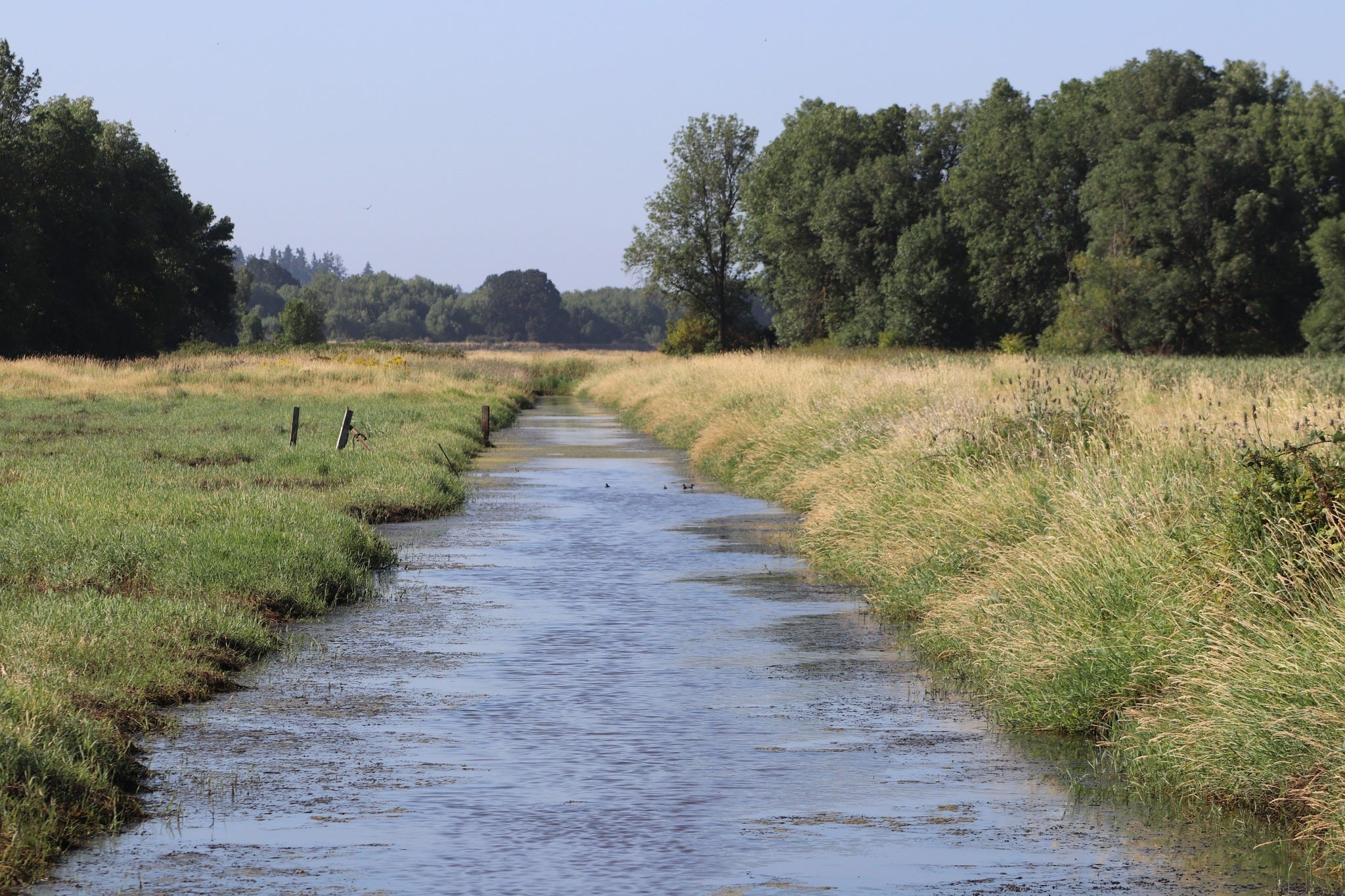
This one is by request. I took this photo at the William L. Finley Wildlife Refuge in Corvallis, Oregon. When I posted it as my cover photo on Facebook, someone said it would make a good writing prompt. So here it is!
If you like what you wrote (or if you don’t - be brave!), send it to larinamichelle@gmail.com (full guidelines here). If I select it for publication in a future issue, I’ll send you or your favorite non-discriminatory charity $20.
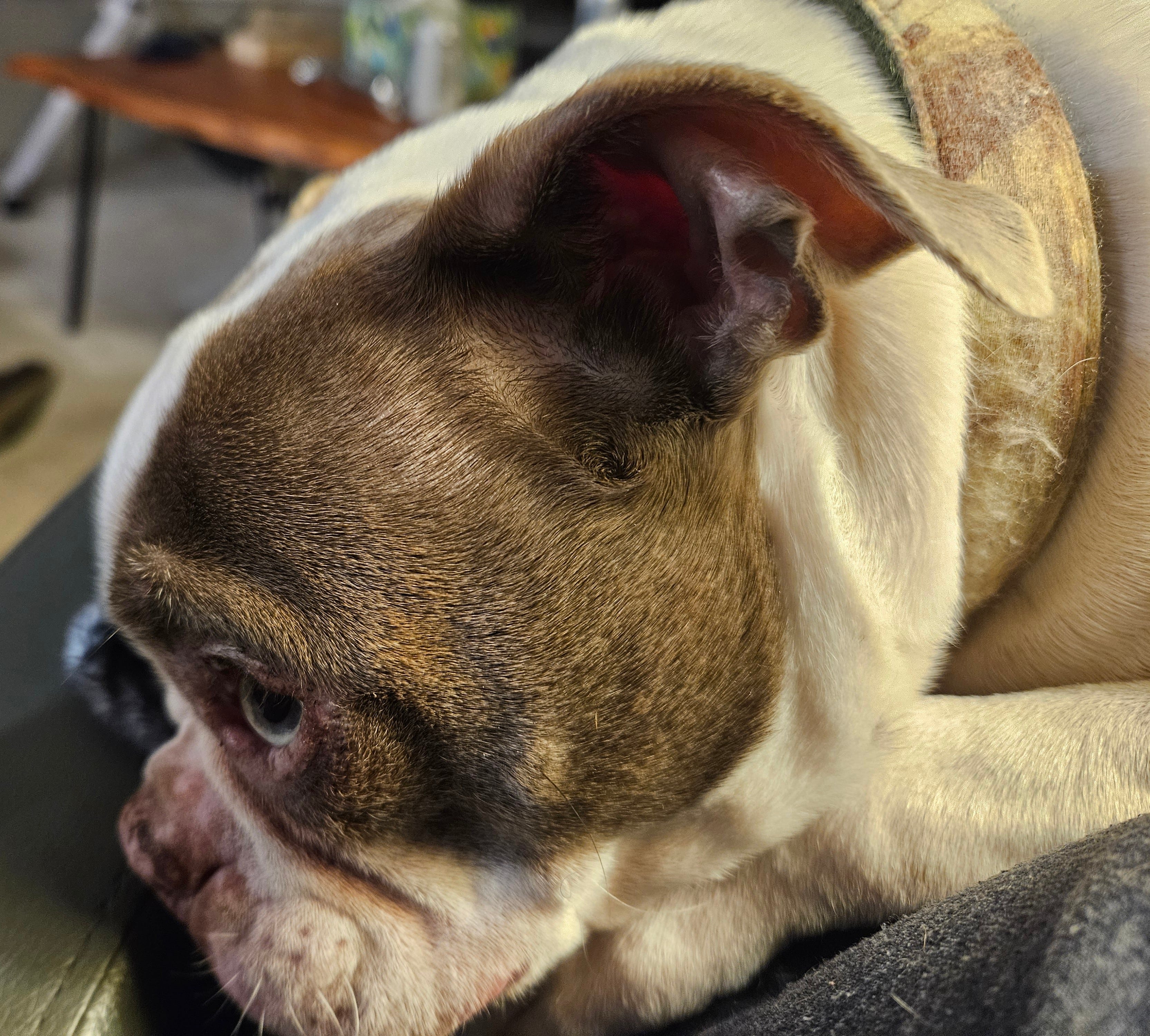
Obligatory Dog Picture